
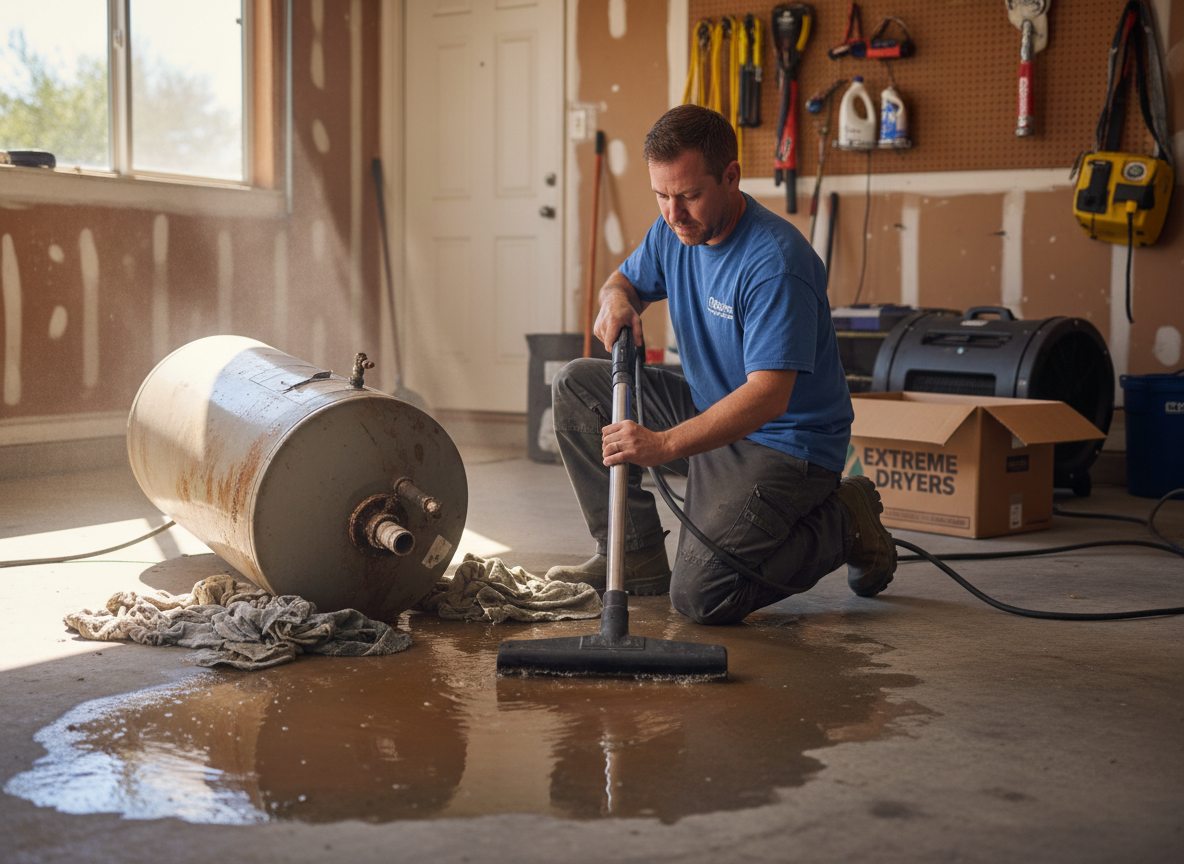
Water heater leaks in Cave Creek homes often start small but spread quickly across concrete slabs or into crawl spaces common in Desert Hills and Carefree Foothills properties. Hard water from local wells accelerates corrosion on older units, especially in homes built before the 2000s. Technicians must pull carpet, baseboards, and sometimes sections of drywall to reach trapped moisture before it migrates toward load-bearing walls. In the Sonoran Desert climate, even mild winter temperatures allow hidden dampness to linger long enough for microbial growth if extraction stops short of 1% moisture content readings.
Extraction equipment must account for the rocky, sloped terrain around Spur Cross Ranch Conservation Area and Cave Creek Regional Park, where access for large dehumidifiers can be limited. Slab leaks under tile floors in Scottsdale-adjacent properties require infrared cameras and moisture meters because visual signs rarely appear until flooring buckles. Homeowners in Downtown Cave Creek frequently discover leaks only after water reaches adjacent garages or storage areas. Proper drying prevents secondary damage to electrical panels and HVAC returns that sit low in many single-story ranch homes throughout Maricopa County.
Edge cases include leaks that travel under stucco exteriors and re-enter through weep holes, a pattern seen in Carefree Foothills builds from the 1990s. Technicians document every step for insurance adjusters because claims involving water heaters often hinge on proving the leak originated from the unit rather than external sources. Final clearance testing uses both pin and pinless meters plus thermal imaging to confirm no residual moisture remains behind cabinets or under vanities.
Technician insight
In Cave Creek, the thing that catches most people out with Water Heater Leak Cleanup is how quickly moisture travels under the slab in Desert Hills homes built on native desert soil. The hard water here eats through older tanks faster than in Scottsdale, and once it reaches the gravel base, extraction takes longer because the ground holds moisture. Homeowners often stop too soon and end up with hidden growth behind kitchen cabinets.
Desert Hills Water Heater Leak
A homeowner in Desert Hills noticed water near the laundry room after a hot summer. Inspection revealed a corroded water heater leaking under the slab toward the garage. Extraction removed water from under tile, drying equipment ran for four days, and clearance testing confirmed safe moisture levels before new flooring was installed.
Water Heater Leak Cleanup Services We Offer
✓Emergency Water Extraction From Heater Leaks
Rapid removal of standing water and saturated materials using truck-mounted pumps and portable extractors sized for Cave Creek residential layouts.
✓Slab Leak Detection and Containment
Non-invasive scanning and temporary damming to stop water migration under tile or concrete floors common in Desert Hills homes.
✓Attic Water Heater Drying and Insulation Replacement
Targeted drying of ceiling cavities and removal of wet insulation after leaks from upstairs units in Carefree Foothills properties.
✓Mold Prevention After Water Heater Failure
Antimicrobial treatment and moisture mapping to stop growth in wall cavities before it spreads into living spaces during hot summer months.
✓Insurance Documentation for Heater Leaks
Detailed moisture logs, photos, and scope of work prepared for claims involving homes near Cave Creek Regional Park.
Water Heater Leak Cleanup Cost in Cave Creek, AZ
| Service | Typical Range | What Affects It |
|---|---|---|
| Standard room extraction and drying | $450–$850 | Single room or hallway; increases with carpet pad removal. |
| Slab leak containment and drying | $900–$1,600 | Depends on square footage under tile and equipment runtime. |
| Attic heater leak drying | $700–$1,200 | Includes insulation removal; higher when access is limited. |
| Mold prevention treatment add-on | $250–$450 | Applied after drying if readings remain elevated. |
Ranges are typical for Cave Creek, AZ and confirmed with an exact written quote before any work starts.
How it works
- 1
Initial Assessment
Technician arrives at the Cave Creek address, locates the leak source, and maps affected materials using moisture meters.
- 2
Water Extraction
Standing water is removed with pumps and wands, followed by removal of saturated baseboards and carpet in affected rooms.
- 3
Drying Setup
Air movers and dehumidifiers are placed based on home layout and local humidity levels typical in the Sonoran Desert.
- 4
Monitoring And Clearance
Daily readings continue until moisture levels return to normal, then final documentation is provided for insurance.
Pricing
Pricing varies by square footage affected, access difficulty, and whether slab or attic work is required.