
2026-08-26 · Thomas Brown
Drying Out Flooded Storage Areas After Flash Flooding
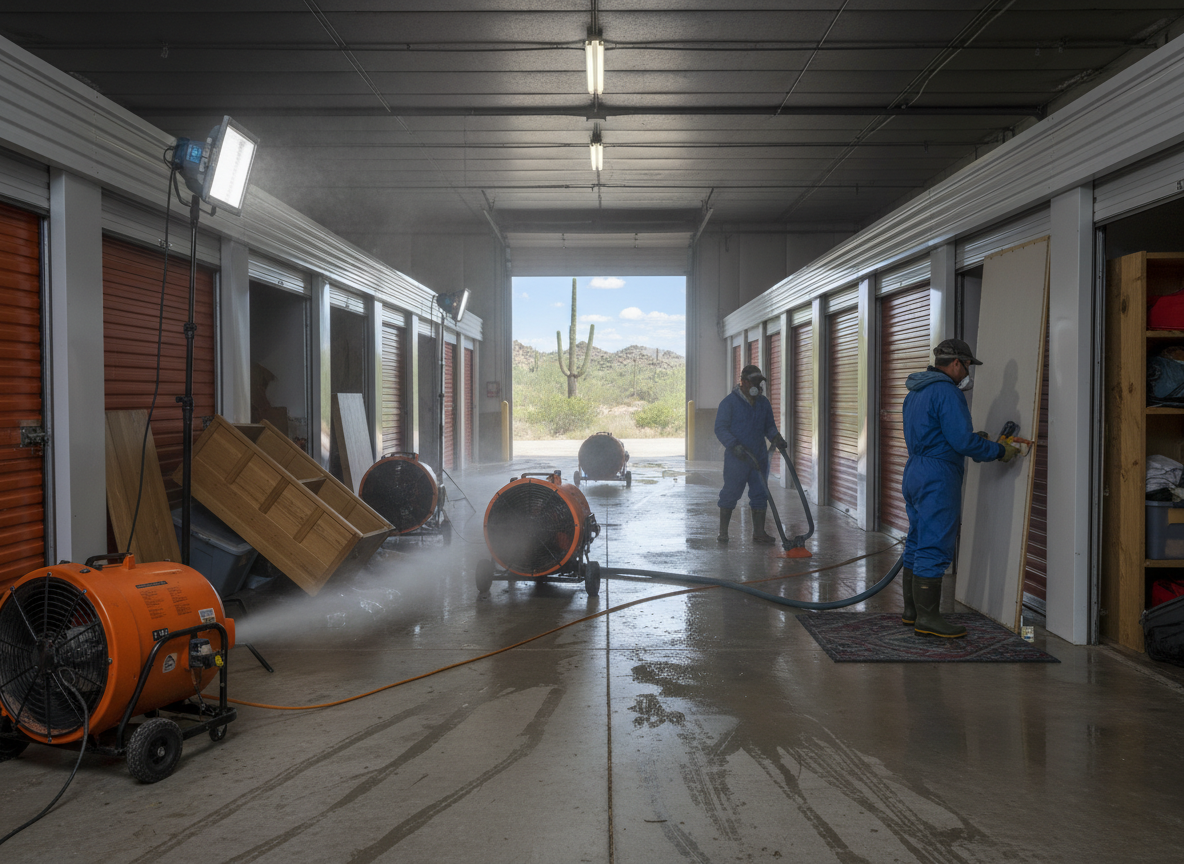
Drying flooded storage areas after flash flooding in Cave Creek requires 48 to 96 hours of active equipment use once bulk water is gone, though complete moisture balance can extend to 10–14 days when concrete floors and stored contents hold residual dampness from Maricopa County runoff.
Evaluating Storage Layouts Common in Cave Creek
Homes in Downtown Cave Creek and Carefree Foothills often feature detached garages or attached storage rooms built on slab foundations that channel water from nearby slopes around Cave Creek Regional Park. These spaces typically hold cardboard boxes, tools, and seasonal items that absorb water quickly during sudden downpours common in the Sonoran Desert. Operators check wall cavities and under shelving units first because trapped moisture leads to hidden mold growth within 48 hours. Concrete surfaces in older Desert Hills properties retain water longer than wood framing, requiring moisture meters to map affected zones before any drying begins. Terrain near Spur Cross Ranch Conservation Area funnels sheet flow toward lower lots, so storage areas on the north side of homes usually see deeper saturation than south-facing ones.
Removing Water and Debris Before Drying
Standing water must be extracted immediately using submersible pumps and wet vacuums to prevent wicking into drywall or insulation. In Cave Creek properties, flash flood debris often includes silt from desert washes that clogs drains and leaves a fine layer on floors. Technicians clear this sediment first because it traps moisture against surfaces. Water Extraction & Removal focuses on pulling water from porous materials like carpet remnants or stored lumber before dehumidifiers start. Items that cannot be salvaged are documented and removed to reduce overall humidity load. This step is critical near Scottsdale borders where higher-density storage units receive runoff from paved roads that accelerates water entry during storms.
Deploying Equipment for Structural Drying
Air movers and dehumidifiers are positioned to create a closed drying loop that targets slab edges and wall bases in storage rooms. In the mild winter months of Cave Creek, ambient humidity stays lower than summer levels, allowing equipment to reach target moisture readings faster than in Scottsdale properties. Structural Drying & Dehumidification uses low-grain refrigerant units sized for 1,000–2,000 square foot spaces typical of local garages. Daily moisture readings track progress on both horizontal and vertical surfaces because desert concrete can release trapped water for days after initial extraction. Over-drying risks cracking older adobe or stucco elements found in Rancho Manana homes, so technicians adjust fan speeds and monitor relative humidity between 35 and 45 percent.
Monitoring and Final Verification Steps
Moisture meters and thermal imaging confirm that wall cavities and subfloor areas return to pre-loss levels before contents are replaced. Storage items are inspected for hidden dampness that could restart mold cycles once humidity rises again during monsoon season. Preventing Secondary Issues After Water Extraction In Cave Creek outlines follow-up checks that homeowners perform every 48 hours after equipment removal. In Carefree properties, where storage often connects to living spaces, final clearance includes checking adjacent rooms for migrated moisture. This verification prevents callbacks and ensures the space stays dry through the next seasonal rain event.
Addressing Flash Flood Patterns Specific to the Region
Monsoon storms deliver 1–3 inches of rain in under an hour across Maricopa County, overwhelming natural drainage near Spur Cross Ranch Conservation Area and sending water into low-lying storage areas. Desert Hills lots with minimal grading experience repeated saturation because caliche soil sheds water rather than absorbing it. Flood Damage Cleanup accounts for these repeated events by documenting patterns that affect the same neighborhoods year after year. Owners learn to elevate stored goods 12–18 inches off floors and seal sill plates to reduce future water entry. These adjustments match the realities of Sonoran Desert terrain where flash floods recur without warning.