
2026-08-26 · Thomas Brown
Water Extraction After Monsoon Flooding In Cave Creek
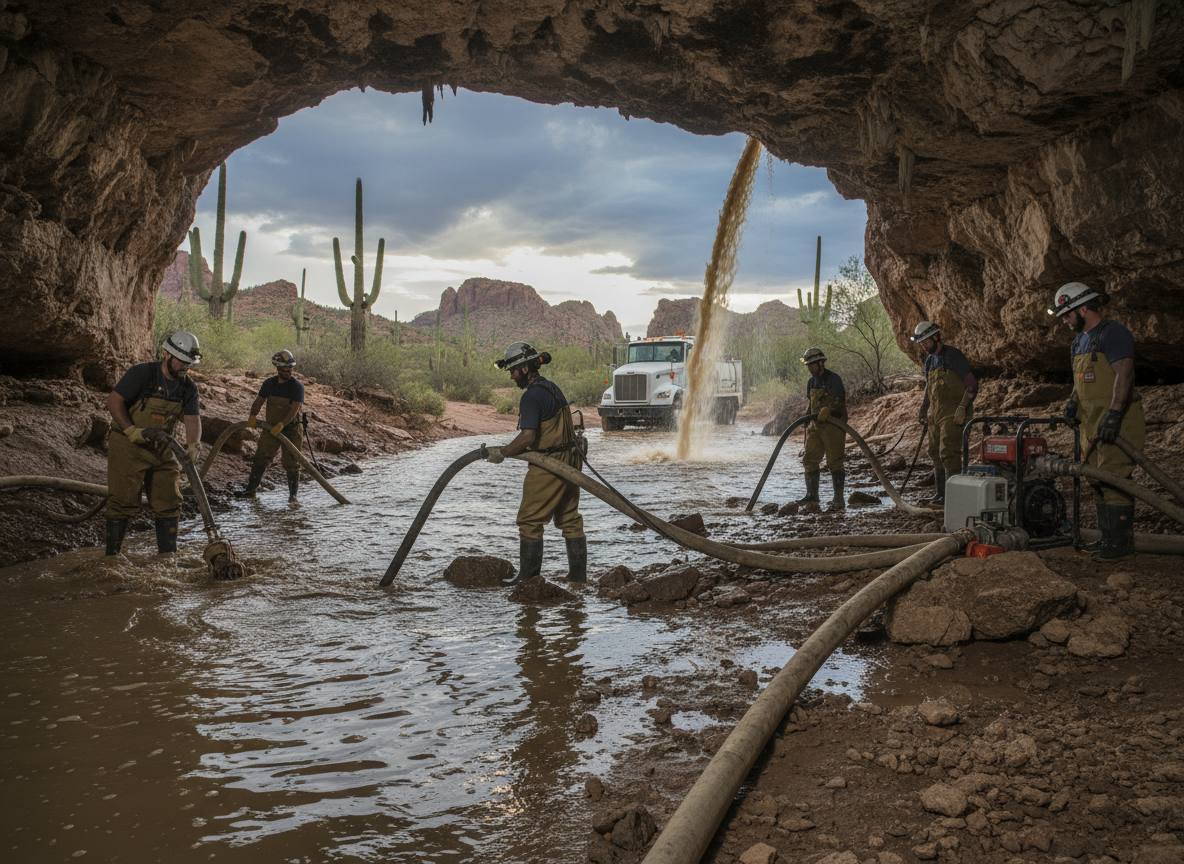
Water extraction after monsoon flooding in Cave Creek starts with rapid removal of standing water within the first 24 to 48 hours to limit moisture absorption into adobe-style or stucco homes common in Downtown Cave Creek and Carefree Foothills. Monsoon storms deliver intense but short bursts of rain that pool on hardpan desert surfaces and flow toward lower elevations near Spur Cross Ranch Conservation Area, saturating foundations faster than in milder climates. Crews use truck-mounted pumps and submersible units rated for 200 to 500 gallons per minute to clear water from garages, patios, and crawl spaces before it migrates into wall cavities. Local soil composed of decomposed granite and caliche slows natural drainage, making mechanical extraction essential rather than waiting for evaporation in the arid air.
Monsoon Flooding Patterns in the Sonoran Desert
Summer monsoons in Maricopa County produce 1 to 3 inches of rain in under an hour on already baked ground, sending sheets of water across Desert Hills properties and into washes that feed Cave Creek Regional Park. These events differ from steady winter rains because runoff concentrates in channels between homes built on slopes, pushing water under doors and into utility rooms within minutes. Older tile-roof homes in the area often see water enter through scuppers or low window sills when debris blocks drainage. Extraction teams prioritize these entry points first, mapping flow paths based on terrain contours rather than assuming uniform flooding across a lot. The mild winters that follow mean any residual moisture can linger for weeks if not addressed, raising humidity levels inside structures even when outdoor temperatures drop into the 50s at night.
Challenges Specific to Cave Creek Neighborhoods
Properties in Carefree Foothills and Desert Hills sit on uneven lots with shallow topsoil over bedrock, so floodwater does not soak away evenly and instead collects against retaining walls or garage slabs. Stucco exteriors common throughout Maricopa County absorb moisture at the base when water sits for more than a few hours, requiring extraction tools that reach behind baseboards without damaging finishes. Nearby Scottsdale developments share similar construction but often have better engineered drainage; Cave Creek homes built before the 1990s frequently lack French drains, increasing the volume of water that must be removed manually. Extraction crews account for these variables by placing barriers at property lines to prevent cross-contamination from neighboring lots during heavy runoff events.
Step-by-Step Water Extraction Process
Technicians begin by isolating electrical hazards and documenting water depth with photos before deploying extraction equipment. Portable extractors with 16-inch wands pull water from carpet and pad in living areas, while larger units handle concrete floors in garages common to Rancho Manana-style homes. After bulk removal, moisture meters check drywall up to 18 inches above the floor line to locate hidden saturation. For deeper penetration in slab-on-grade homes, crews may use perimeter drilling to relieve pressure and allow water to reach the surface for extraction. All steps follow a sequence that prevents pushing water farther into wall cavities or under cabinets. Water extraction services address these layers methodically to reduce long-term structural impact.
Post-Extraction Drying and Secondary Risks
Once visible water is gone, high-velocity air movers and dehumidifiers rated for 70 to 150 pints per day run continuously to drop interior humidity below 50 percent within 48 hours. The Sonoran Desert's low ambient moisture helps this process when equipment is positioned correctly, but sealed homes with energy-efficient windows trap humidity longer than older builds. Structural drying and dehumidification prevents mold growth on wood framing that can begin in as little as 72 hours after saturation. Properties near North Scottsdale often require extra attention to attic spaces where monsoon-driven roof leaks combine with extraction needs. Flood damage cleanup teams monitor readings daily until levels match pre-loss conditions recorded on unaffected walls.
Related Local Considerations
Homeowners in areas like Desert View or Lone Mountain should also review cost factors for water extraction in Cave Creek properties because terrain slope and home age directly affect equipment hours needed. Removing standing water from Cave Creek garages and driveways provides additional detail on handling hardscape flooding that often accompanies monsoon events. Storm water damage restoration covers roof-related intrusion that frequently occurs alongside ground-level extraction in tile-roof neighborhoods. Business operations at 6130 E Cave Creek Rd run Monday through Friday 8am to 6pm and Saturday 9am to 2pm for scheduling assessments after storms.