
2026-08-26 · Thomas Brown
Water Extraction For Burst Pipes During Winter Freezes
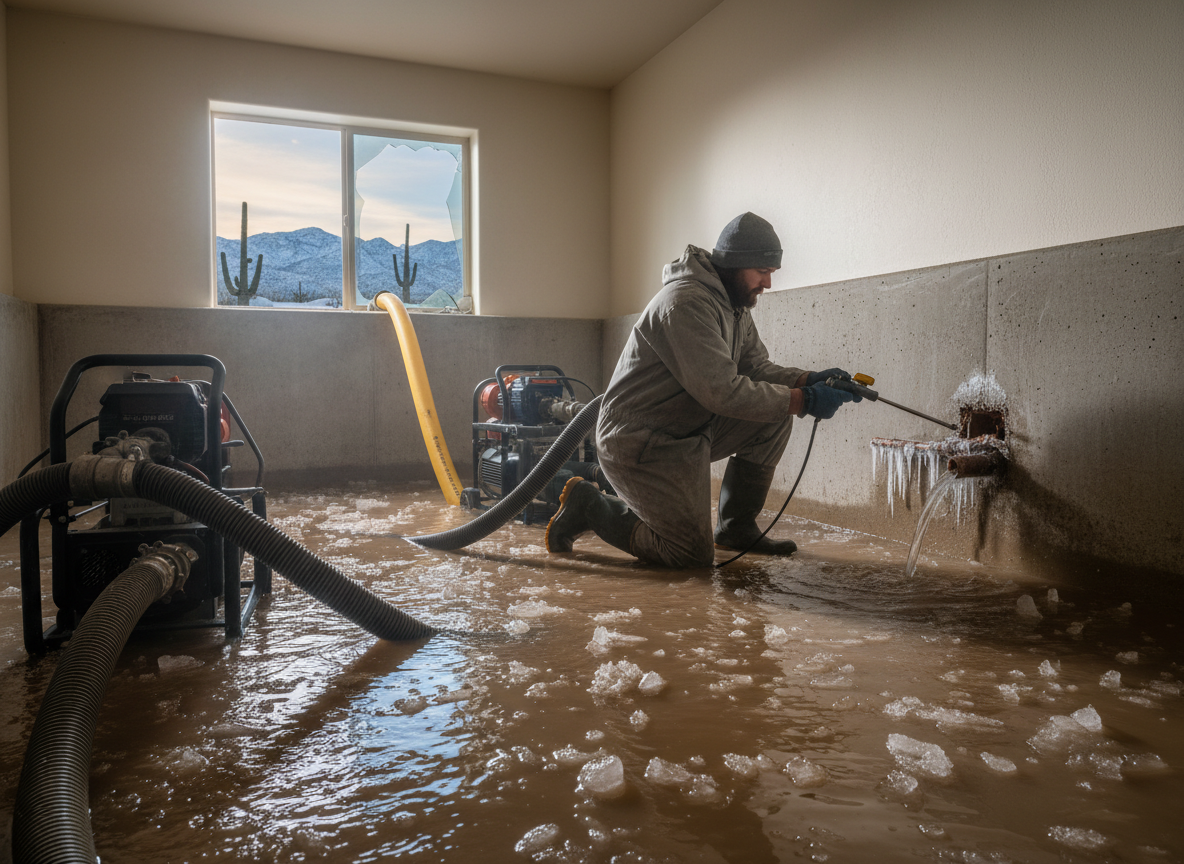
Water extraction for burst pipes during winter freezes in Cave Creek typically begins with isolating the leak and removing standing water within the first 4-6 hours to prevent deeper saturation in slab foundations common to homes in Downtown Cave Creek and Carefree Foothills. Crews use truck-mounted pumps rated for 200-500 gallons per minute followed by submersible units for confined spaces, then apply air movers and dehumidifiers running 24-48 hours depending on square footage and material porosity.
Why Freezes Cause Pipe Bursts in Maricopa County Homes
The Sonoran Desert climate brings mild winters with nighttime lows occasionally dipping below 32°F, enough to expand water in older copper or galvanized lines installed 15-30 years ago in Desert Hills properties. These homes often sit on expansive clay soils that shift with temperature swings, stressing joints near exterior walls and crawl spaces. In contrast to Scottsdale's denser subdivisions, Cave Creek's spread-out lots near Cave Creek Regional Park expose more pipes to radiant heat loss at night. Owners in Rancho Manana notice bursts most often in laundry rooms and bathrooms where pipes run through uninsulated exterior walls.
Local Terrain and Housing Factors Affecting Extraction
Sloped lots around Spur Cross Ranch Conservation Area direct meltwater toward foundations, so extraction crews must account for hidden pooling under patios and driveways before drying begins. Single-story ranch homes prevalent in North Scottsdale border areas have concrete slabs that absorb water quickly, extending drying times by 12-24 hours compared to raised-floor builds. Technicians monitor moisture with meters calibrated for Arizona's low humidity, targeting below 15% readings in drywall and subfloors to avoid mold in the dry air that follows initial removal.
Extraction equipment placement considers narrow access roads in Rockaway Hills and limited parking near the address at 6130 E Cave Creek Rd. Portable generators run quietly during daytime hours to respect neighborhood noise rules while powering 1,000-2,000 CFM dehumidifiers.
Step-by-Step Water Extraction Process for Freeze Damage
- Shut off main water supply and drain remaining lines to stop additional flow.
- Document visible damage with photos before moving furniture or appliances.
- Deploy extraction tools starting from the highest point of water migration and work downward.
- Remove baseboards and drill small weep holes in affected drywall for hidden moisture release.
- Position drying equipment in a grid pattern covering the entire wet zone.
Follow-up visits occur every 24 hours to adjust equipment and recheck readings until levels stabilize.
For detailed guidance on related plumbing issues, review our burst pipe and plumbing leak cleanup resources. Homeowners can also see how similar extraction applies after roof issues in our post on water extraction following roof leaks on tile homes.
Preventing Secondary Issues in Carefree and Scottsdale Border Homes
Once bulk water is gone, focus shifts to preventing warping in hardwood floors or delamination in tile grout lines typical of Cave Creek builds. Running dehumidifiers at 40-50% relative humidity for 3-5 days keeps secondary mold growth below thresholds even when outdoor temperatures climb back into the 60s. Residents in Desert View often schedule follow-up inspections 7-10 days later because rapid daytime heating can pull residual moisture from deeper wall cavities. This approach pairs well with our water extraction and removal protocols tailored to Maricopa County conditions.