
2026-08-26 · Thomas Brown
Water Extraction Following Roof Leaks On Tile Homes
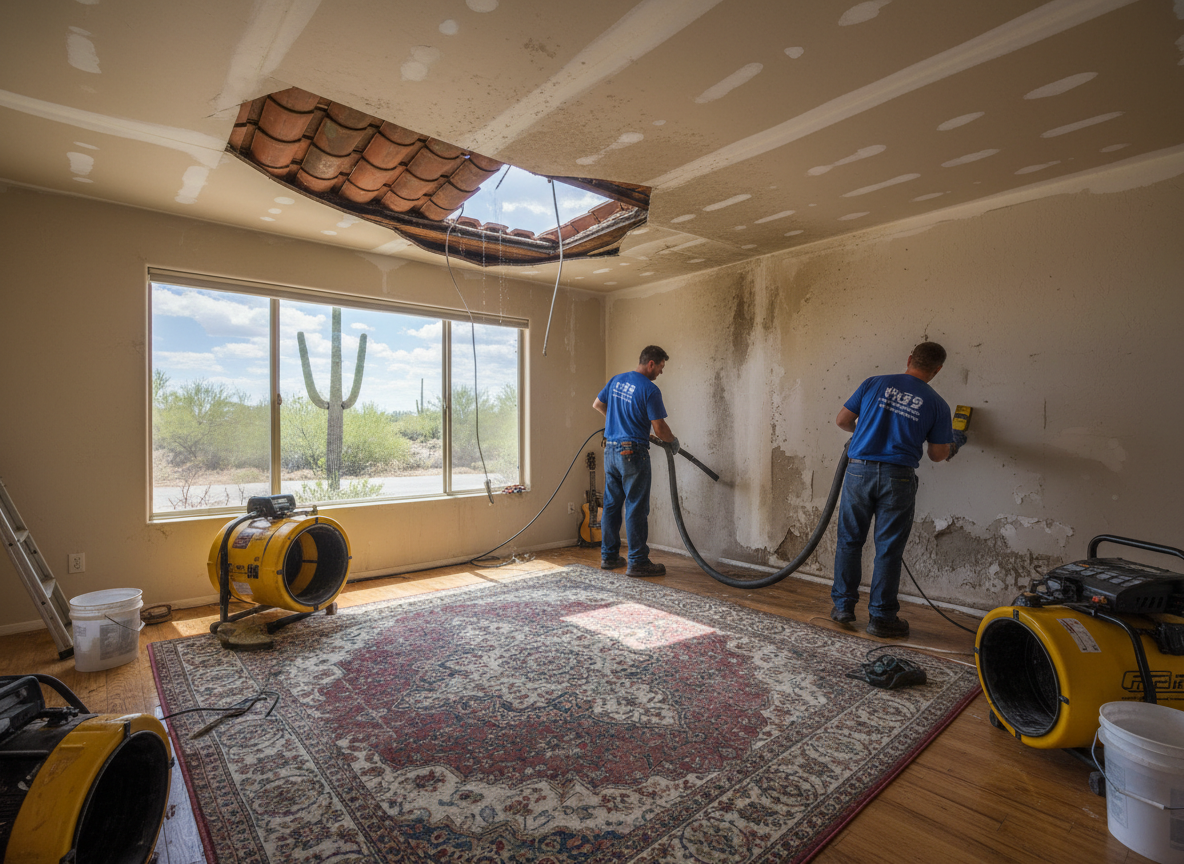
Water extraction following roof leaks on tile homes in Cave Creek typically requires 48 to 72 hours of active removal and another 3 to 5 days of drying when crews use industrial equipment on 2,000-square-foot homes. The process starts with identifying the leak path through the tile and underlayment, then removing standing water before it reaches the attic or drywall. In the Sonoran Desert climate, sudden monsoon downpours often overwhelm aged tile roofs on homes built in the 1980s and 1990s across Desert Hills and Carefree Foothills.
Initial Assessment and Containment in Maricopa County Tile Homes
Crews begin by mapping moisture with infrared cameras and moisture meters on every affected ceiling and wall. Tile roofs in Carefree and Scottsdale border areas commonly channel water along the underlayment for several feet before it drips, so technicians pull back tiles only where needed rather than replacing the entire roof. Containment barriers go up immediately to protect unaffected rooms. Homeowners in Downtown Cave Creek often see water travel along stucco walls because the homes sit on sloped lots near Cave Creek Regional Park. Extraction trucks park at the 6130 E Cave Creek Rd address staging area before heading to jobs in Rancho Manana or Rockaway Hills. This step prevents further saturation of insulation and wood framing that can swell in the dry heat once moisture is introduced.
Extraction Equipment and Techniques for Roof Leak Water
Technicians deploy truck-mounted extractors first to pull bulk water from ceilings and attics, followed by portable units for tight spaces between rafters. In tile homes, water often pools above the drywall in the attic, requiring removal through small access cuts rather than full ceiling demolition. Water Extraction & Removal crews adjust suction levels to avoid pulling loose tile pieces during monsoon events. Subfloor extraction follows if water migrates downward through second-story ceilings. Daily moisture readings guide progress, with readings dropping below 15 percent before drying equipment is placed. Homes near Spur Cross Ranch Conservation Area face extra dust during extraction, so crews seal vents to keep debris out of the equipment.
Drying Challenges After Monsoon Roof Leaks
Once water is removed, Structural Drying & Dehumidification begins with air movers directed at wet framing and dehumidifiers sized for the home's square footage. The Sonoran Desert's low humidity helps, yet trapped moisture in tile underlayment or blown-in insulation can linger for weeks without targeted airflow. In Carefree Foothills homes with vaulted ceilings, crews often install drying systems in the attic space itself. Roof Leak Water Damage Restoration teams check for hidden pockets behind stucco because the material holds moisture longer than drywall. Properties in Desert Hills built before 1995 frequently have single-layer underlayment that fails faster, extending drying times by two days. Monitoring continues until all readings stabilize.
Preventing Secondary Damage and Next Steps
After extraction and drying, homeowners should schedule a follow-up inspection within 30 days to catch any missed moisture. How To Spot Hidden Water Damage In Cave Creek Homes outlines common signs such as sagging drywall near roof valleys. Residents in North Scottsdale and Anthem who experience repeated leaks often replace underlayment during repairs rather than just tiles. Cave Creek Restoration Solutions operates Monday through Friday from 8am to 6pm and Saturdays from 9am to 2pm to handle these calls. Calling early in the monsoon season limits the spread into living spaces and reduces the chance of mold growth in the dry desert air.