
2026-08-26 · Thomas Brown
Water Extraction In Cave Creek Homes With Slab Foundations
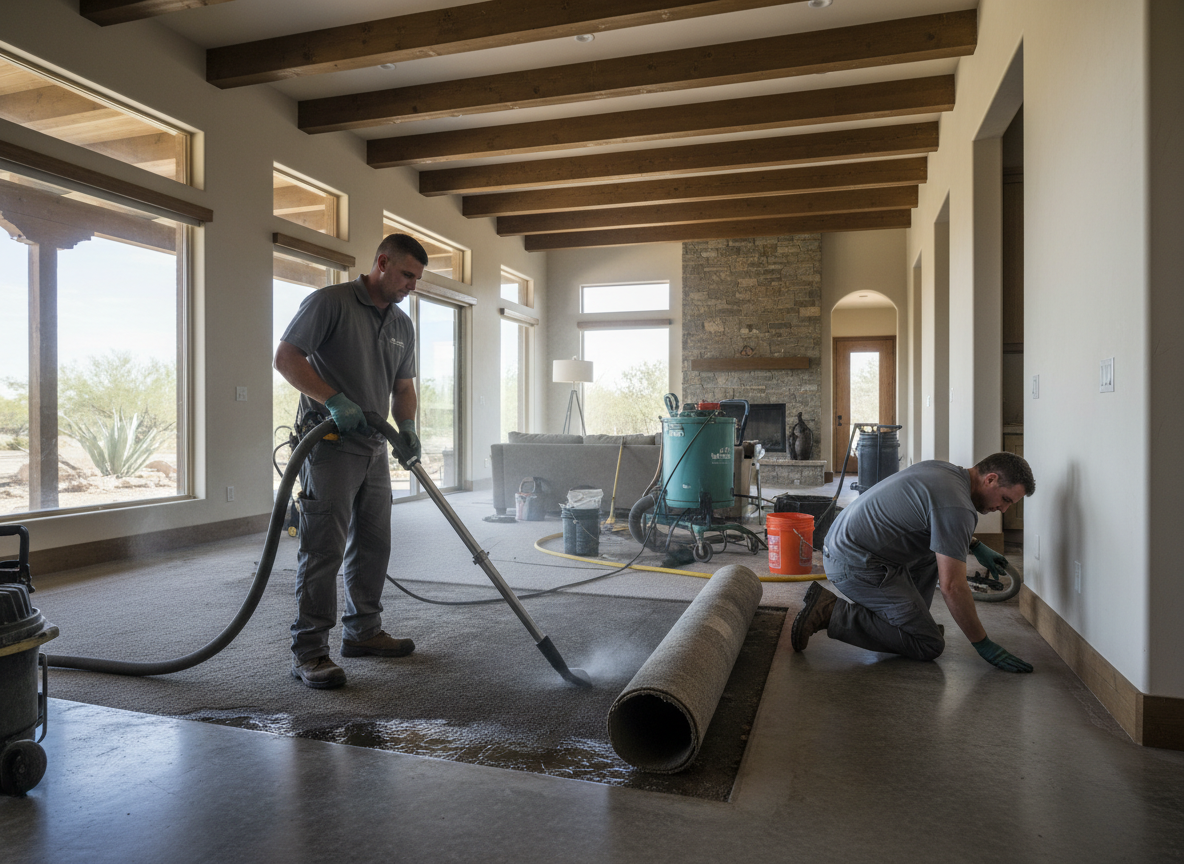
Water extraction in Cave Creek homes with slab foundations begins with perimeter drilling and injection ports to pull standing water from beneath the concrete, often completing the initial removal phase in 24 to 48 hours before structural drying starts.
Slab Construction Realities in Local Neighborhoods
Homes in Downtown Cave Creek, Carefree Foothills, and Desert Hills commonly sit on monolithic slabs poured directly on compacted desert soil. These slabs measure 4 to 6 inches thick and rest above shallow footings that follow the rocky terrain near Cave Creek Regional Park and Spur Cross Ranch Conservation Area. When water enters from plumbing leaks or appliance failures, it spreads laterally under the slab because the native caliche and decomposed granite limit vertical drainage. Technicians must map moisture migration with infrared cameras and moisture meters before choosing drill points, because random penetration risks hitting rebar or post-tension cables common in Maricopa County builds from the 1990s onward.
Sonoran Desert Climate Effects on Extraction
Hot summer days above 105 degrees Fahrenheit accelerate evaporation at the slab surface while trapping humidity beneath, creating hidden pockets that standard fans miss. Mild winter nights in the 40s allow slower drying and increase condensation risk inside wall cavities adjacent to the slab edge. Seasonal monsoon rains can push additional water under the foundation from yards sloping toward the slab, especially in properties bordering the washes around Spur Cross Ranch Conservation Area. Extraction crews adjust equipment run times and dehumidifier settings daily to match these swings rather than following a fixed schedule.
Extraction Process for Slab Homes
Technicians first isolate the affected zone, then create 3/8-inch holes every 12 to 18 inches along the slab perimeter to insert wands connected to high-volume truck-mounted extractors. Once bulk water is removed, they install air movers angled under cabinets and along baseboards while placing dehumidifiers rated for 70-pint daily removal in each room. In larger layouts common in North Scottsdale spillover neighborhoods, multiple units run simultaneously for 5 to 8 days. Moisture readings are taken at the slab center and edges every 24 hours until levels drop below 12 percent. See the detailed steps in Water Extraction & Removal.
Avoiding Secondary Issues After Slab Extraction
Residual moisture left under the slab often leads to mold growth along the footer or inside adjacent drywall. Crews therefore seal extraction holes with hydraulic cement and apply antimicrobial coatings to the perimeter before reinstalling baseboards. Homeowners in Carefree and Scottsdale should schedule follow-up readings at the 30-day mark because desert temperature cycles can pull remaining vapor back to the surface. For more on long-term prevention, review Preventing Secondary Issues After Water Extraction In Cave Creek. Slab leak cases require additional coordination with plumbers before final drying begins; those details appear in Slab Leak Water Damage Restoration.
Practical Next Steps for Cave Creek Residents
Document all affected rooms with photos before any work starts and note the exact locations of supply lines under the slab. Contact Cave Creek Restoration Solutions at 6130 E Cave Creek Rd during business hours Monday through Friday 8am to 6pm or Saturday 9am to 2pm to schedule an on-site assessment. Early intervention limits the depth of moisture travel and reduces the chance that cabinets or flooring must be removed later.